For past articles published in SA Flyer Magazine, visit the AOPA Briefing page.
For current information and discussion, visit our Facebook page.
"https://aopa-sa.com/aopa-briefing">AOPA Briefing page.
In our 70th anniversary newsletter last year, we described the regulatory storm gathering over South Africa's general aviation community. That storm broke in June 2025 when the Director of Civil Aviation promulgated SA-CATS 2/2025, deleting the provision that had allowed private, non-commercial aircraft to operate their engines beyond the mandatory 12-year overhaul cycle, subject to annual inspections.
The consequences were immediate and severe. This newsletter is an account of what has happened since, what AOPA SA has done about it, and what we need from our members to continue the fight.
The short version: we have not been silent, we have not been intimidated, and we have not gone away.
For ten years, SA-CATS 43.02.5 paragraph 3 allowed private aircraft owners to operate their Lycoming and Continental engines beyond the 12-year calendar TBO, provided annual inspections were carried out to the standard set by the manufacturer's own service instructions. This provision was aligned with international practice — the FAA still applies a similar approach, as does EASA — and it operated without a single recorded safety incident attributable to it during its entire decade in force.
Its deletion was not preceded by any safety case. No accident investigation had identified the 12-year limit as a cause. No consultation was conducted with private aircraft owners before the deletion took effect. It happened, as the Gauteng High Court noted in its October 2025 judgment in CAASA & Others v Director of Civil Aviation & Others, without the proposals of the affected industry being incorporated or even adequately explained away.
The impact falls almost entirely on private, non-commercial owners. Approximately 70% of South Africa's private GA fleet has been grounded or placed at risk. Engine overhaul costs range from R750,000 to R4 million per aircraft, with parts lead times of up to 31 months. Only five engine overhaul facilities exist in South Africa. Aircraft values have fallen sharply — a Cessna C182 that was worth $190,000 is now valued at $147,000. ZS-registered aircraft operating throughout sub-Saharan Africa are affected by default.
From the moment it became clear that the deletion had occurred without proper consultation, AOPA SA has pursued every available avenue to protect our members' interests.
October 2025: AOPA SA submitted a formal request under section 5 of the Promotion of Administrative Justice Act (PAJA) to the Director of Civil Aviation, asking for written reasons for the deletion. SACAA requested an extension of time to collate records — revealing that no immediately available rationale existed for a decision that had grounded thousands of aircraft.
November 2025: AOPA SA formally appointed a qualified representative to sit on the Civil Aviation Regulations Committee (CARCom) in terms of section 157(1)(c)(i) of the Civil Aviation Act. Within 24 hours, the CARCom Chairperson refused the appointment by email, stating simply that "AOPA is not a CARCom member." No statutory basis for the exclusion was provided.
January 2026: SACAA formally refused our PAJA request — not on the merits, but on the assertion that AOPA SA lacks legal standing. The grounds cited included reference to a personal defamation case brought by individual SACAA employees in their private capacities in 2015 — a case that was unconditionally withdrawn by the plaintiffs in June 2025. AOPA SA issued a final demand comprehensively demolishing each of these grounds. A voluntary association acting in the interest of its members has full standing under section 38(e) of the Constitution.
March 2026: AOPA SA submitted detailed technical comments to CARCom on the proposed Appendix 3 — SACAA's proposed replacement for the deleted paragraph 3. Our core submission: the proposal introduces unnecessary complexity, duplicates existing obligations, and imposes burdens without a demonstrated safety justification. The simpler, proven solution is reinstatement of the original paragraph 3, which operated safely for a decade.
May 2026: AOPA SA submitted a formal letter to the Minister of Transport, the Honourable Barbara Creecy MP, requesting that she decline to promulgate the proposed Appendix 3 amendment pending a proper, unconflicted consultative process that genuinely includes private aircraft owner representation. The Minister's office acknowledged receipt within hours.
Over recent weeks, and particularly over the past weekend, AOPA SA and its President have been subjected to an organised campaign of adverse commentary. This campaign makes two principal false claims: that AOPA SA's membership numbers are fabricated, and that AOPA SA's participation in the regulatory process has delayed resolution of the grounding crisis. Both claims are false.
On membership: AOPA SA represents approximately 1,200 private aircraft owners and pilots. This figure has been stated consistently in every formal document submitted to SACAA, to CARCom, and to the Minister. It has not been disputed through any legitimate channel.
On delay: AOPA SA submitted its CARCom comments on 19 March 2026 — the last day of the published comment period — in full compliance with the regulatory process. The CARCom process under CAR Part 11.03 is not complete until all timely comments have been considered. AOPA SA caused no delay. We received a letter from an attorney purporting to represent a group of affected owners — a letter that threatened legal action against AOPA SA and this writer personally for submitting those comments. We regard that threat as an attempt to suppress legitimate public participation in a statutory regulatory process, and we said so in terms.
The more important question is who is driving the proposed Appendix 3 amendment and why. The group nominally representing "private owners" in the CARCom process was not formed by private owners. It was established by the owner of a commercial aviation training organisation, together with legal representatives. Aviation training organisations rent privately-owned aircraft rather than investing in their own fleets. They therefore have a direct commercial interest in regulatory outcomes that affect those aircraft — an interest that is not always aligned with the interests of the private owners who own them. This structural conflict of interest was never disclosed during the CARCom process, and AOPA SA's formally appointed representative was excluded from that process entirely.
AOPA SA does not engage in personal attacks. But we will not be silenced, and we will not allow a false narrative about our role in this dispute to go unanswered.
The ministerial letter is now in the Minister's hands. We are awaiting her substantive response. If the Minister declines to intervene and the Appendix 3 amendment is promulgated, AOPA SA will consider whether to institute judicial review proceedings under section 6 of PAJA, challenging both the original deletion and the Appendix 3 amendment on grounds of procedural unfairness, unreasonableness, and unlawfulness.
We are also in contact with international stakeholders — including ICAO, IAOPA, the FAA as State of Design, and EASA — regarding South Africa's potential non-compliance with the Chicago Convention's provisions on continuing airworthiness and non-discrimination in aircraft operations.
Running a sustained advocacy and potential litigation campaign costs money. It costs time. It costs the willingness to stand firm when threatened. AOPA SA has demonstrated all three. What we need from our members is the financial foundation to continue.
AOPA SA membership does not lapse — our constitution provides that membership continues until death, resignation, or removal by board resolution. However, members in arrears with their subscriptions lose their voting rights. Invoices will be issued in the coming days following the recent unexpected passing of our secretary Elaine, who was in the process of bringing membership records up to date. We pay tribute to her dedicated service. If you wish to settle your subscription ahead of receiving an invoice, please contact us directly at admin@aopa.co.za.
If you know other aircraft owners who are not yet members, this is the moment to bring them in. The strength of our representation before the Minister, before CARCom, and potentially before a court, depends directly on the breadth and financial health of our membership.
Way back in 1956, a gentleman by the name of Hendrik Pistorius, together with a group of like-minded pilots and aircraft owners, got together to form the Aircraft Owners and Pilots Association of South Africa — AOPA SA.
"Oom Hennie," as he was affectionately known, was also celebrated in business circles as the "Lime King of Africa" for his agricultural lime manufacturing enterprise. He modelled the new association on AOPA USA and the growing family of AOPAs elsewhere in the world — a family that today numbers more than 80 national associations. From its very first day, AOPA SA's purpose has remained unchanged: to represent and protect the interests of private aircraft owners and pilots in South Africa.
Oom Hennie's vision extended well beyond our borders. South Africa was one of five founding members — alongside the USA, Australia, Canada, and the Philippines — of the International Council of Aircraft Owner and Pilot Associations (IAOPA), which came into being on 2 February 1962. The permanent organisation was formally constituted in October 1964 and, on that same occasion, received observer accreditation from the International Civil Aviation Organisation (ICAO). This was, and remains, a distinction no other general aviation body has achieved.
The purpose of IAOPA was — and is — straightforward but vital: to give general aviation a seat at the table where the global rules of the air are written. ICAO sets the standards that all 193 member states party to the Chicago Convention are obliged to implement. Without a credible international voice, the interests of private pilots and aircraft owners risked being entirely overlooked in favour of the commercial airline industry.
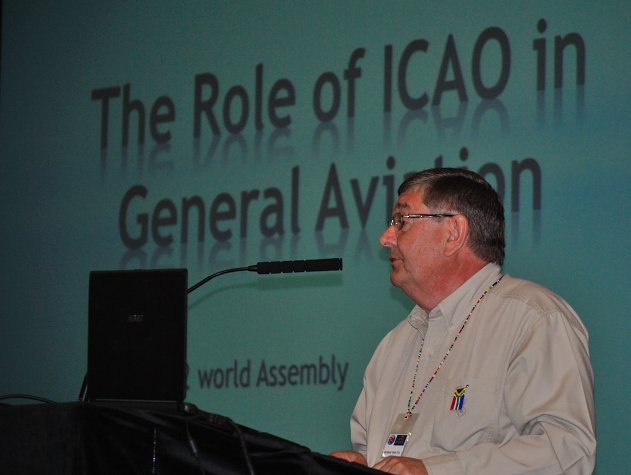
That voice made a real and lasting difference. Recognising the distinct needs of general aviation, ICAO's 15th Assembly in 1965 directed that the existing operating standards be reviewed with general aviation firmly in mind. The result was the adoption, on 2 December 1968, of Annex 6 Part II — dedicated entirely to international general aviation — with the existing Annex 6 simultaneously redesignated as Part I, covering international commercial air transport. This clear, parallel structure remains the global framework to this day: prescriptive standards for commercial operations carrying fare-paying passengers, alongside appropriately tailored standards for general aviation that place responsibility primarily with the owner and pilot-in-command. South Africa's role in bringing this about is a source of quiet but justified pride.
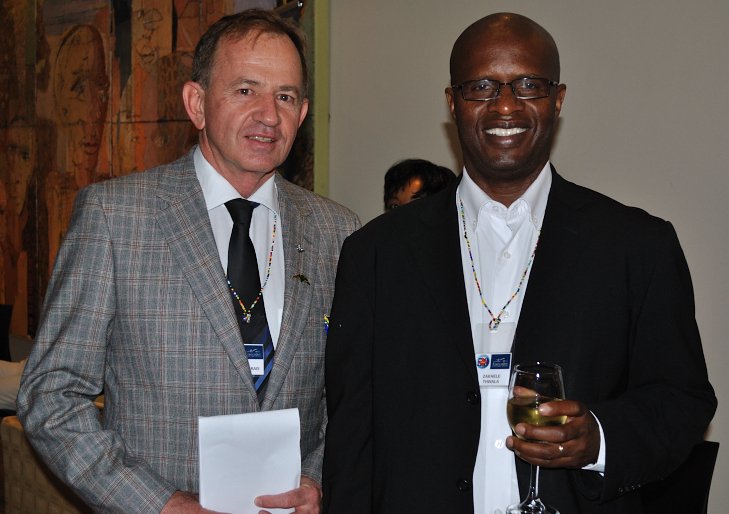
Closer to home, Oom Hennie himself was fittingly honoured at the 2012 IAOPA World Assembly, which AOPA SA had the privilege of hosting at the beautiful Spier Wine Estate in Stellenbosch. More than 100 delegates attended from around the world, and the Assembly was addressed by ICAO's Mitchell Fox and South Africa's Acting Director of Civil Aviation, Zakhele Thwala. Hendrik Pistorius, then 95 years old, received the recognition he so richly deserved.
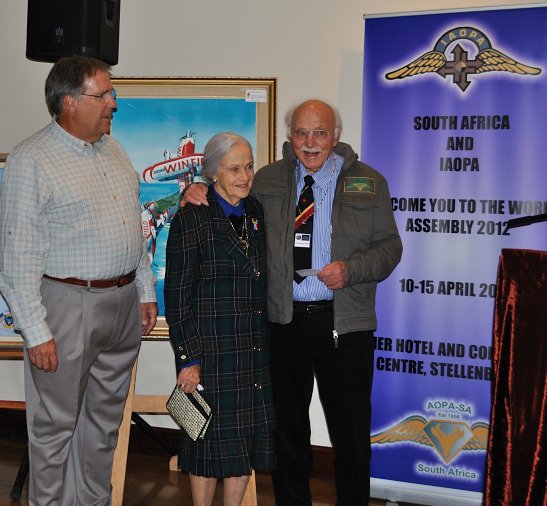
Sadly, Oom Hennie passed away in 2017 at the remarkable age of 100. His legacy, however, endures in every regulation that treats general aviation as a distinct and valued part of civil aviation — and in the organisation he helped bring into being nearly seven decades ago.
AOPA SA has carried that legacy forward ever since, working to keep general aviation both safe and accessible. The challenges we face are real and ongoing: the cost of owning and operating a private aircraft has risen sharply year on year, and the regulatory environment grows ever more complex — sometimes reflecting the genuine demands of safety, but sometimes driven by commercial interests seeking to exploit the more flexible standards that appropriately apply to general aviation.
AOPA SA is actively engaged on several of these fronts, and some of the battles ahead will require serious commitment and resources. We will be sharing more detail on these issues in upcoming newsletters. For now, it is worth reflecting that an association with nearly seven decades of history, and a membership running into four figures, carries real weight — but only when that membership is active and engaged.
We look forward to your continued participation, and to keeping you informed in the newsletters ahead.